Children’s social care in England 2026: what the figures mean for homes
The latest national figures show growth in homes and places. The practical question is how providers evidence suitability, staffing, care and oversight.

Sector briefings, thoughtful practice articles and ResiNotes product thinking for people working in and leading residential children’s homes.
 Regulatory update
Ofsted has set out a sharper enforcement and registration approach to illegal children's homes. Here is the practical read-across for registered residential providers.
Read current sector briefings and product notes online, print or save articles, or follow the feed links beside the article list.
The latest national figures show growth in homes and places. The practical question is how providers evidence suitability, staffing, care and oversight.
Recent questionnaire findings reinforce why children’s views, relationships and participation need to remain visible in everyday records.
The government’s implementation plan puts stable placements, workforce capability and accountable information systems firmly on the agenda.
How connected objectives, actions and everyday records can help homes see what changed for a young person without creating another form.
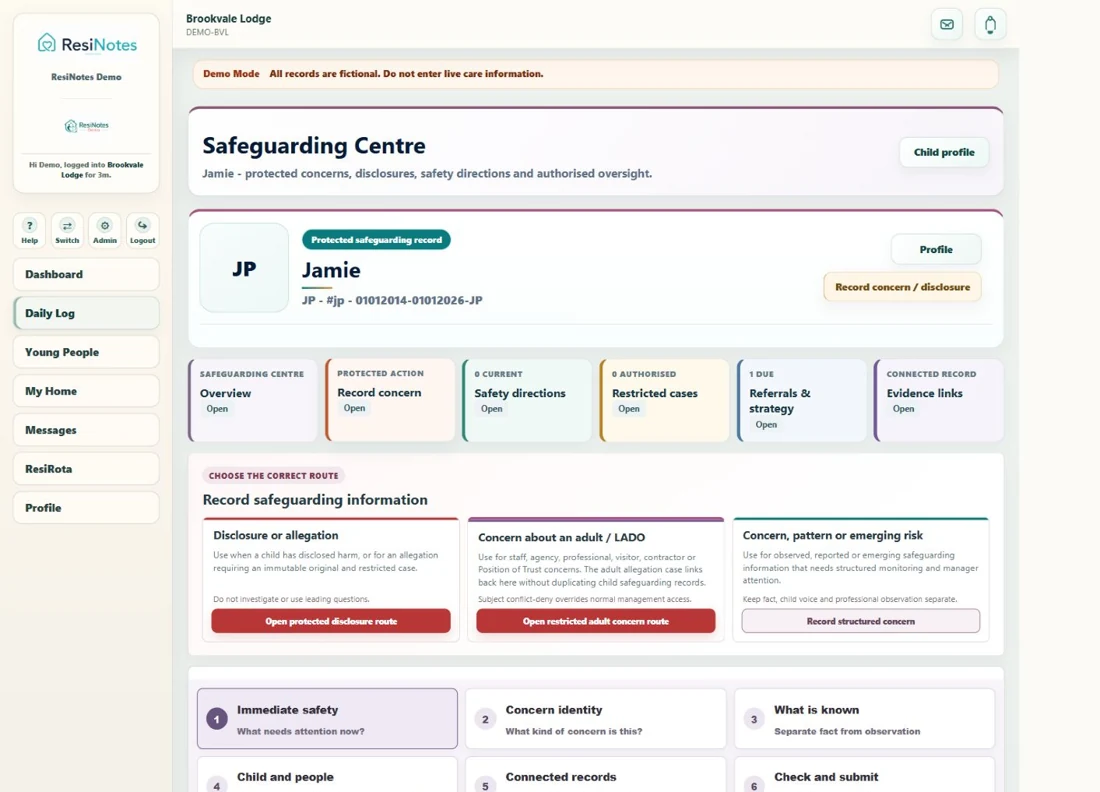
A practical look at keeping the child’s context, evidence, decisions and follow-up connected when a concern is raised.
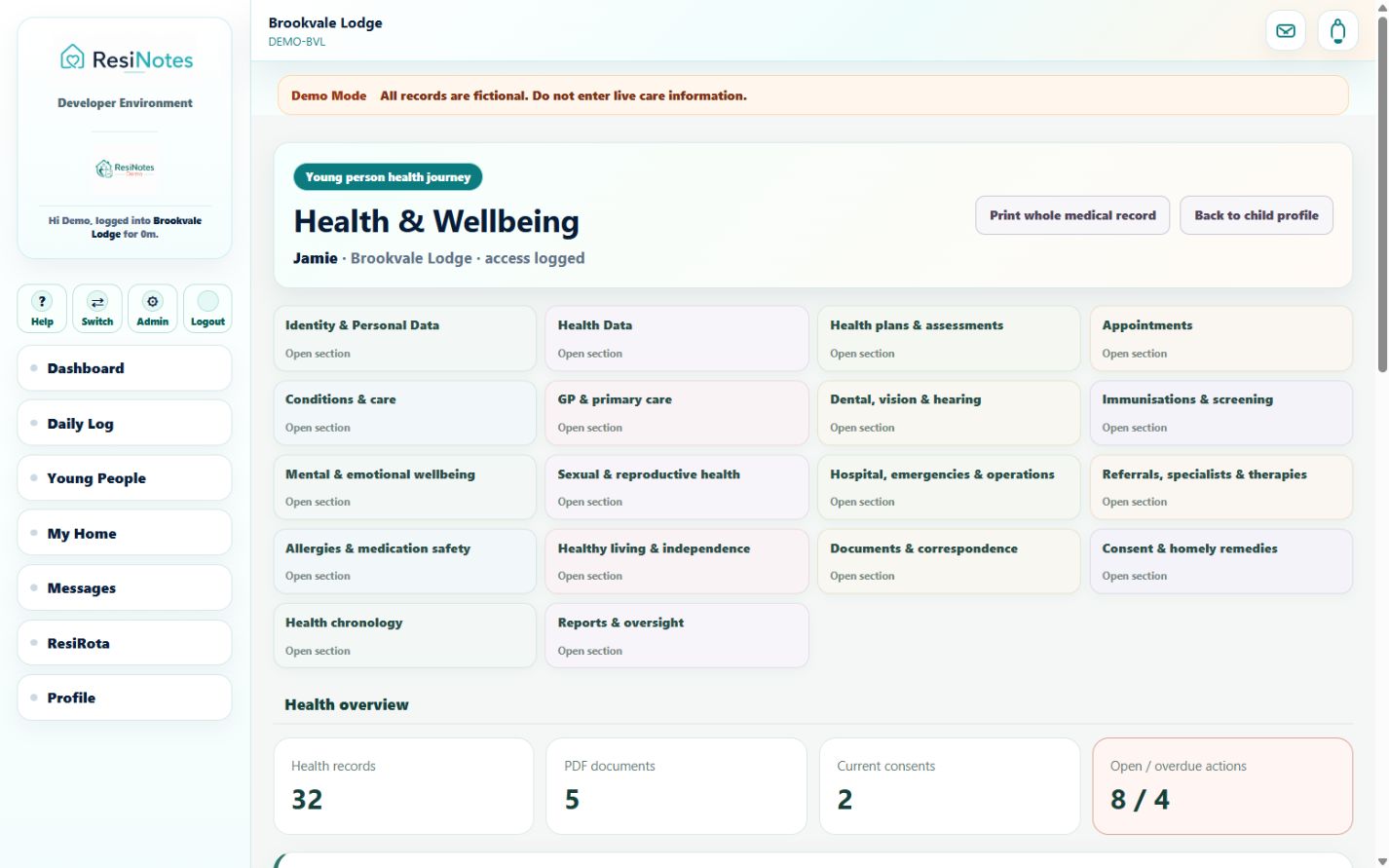
Why health records work better when appointments, evidence, assessments and the young person’s views stay connected without becoming one long page.
A plain-English read of the revised inter-authority recoupment guidance and the records that support clear coordination.
The practical themes from the Department for Education evidence review on knowledge, skills and professional development.
The practical residential-care read-across from the updated statutory guidance and new information-sharing duty.
What the government’s September policy paper means for continuity, belonging and connected residential-care records.
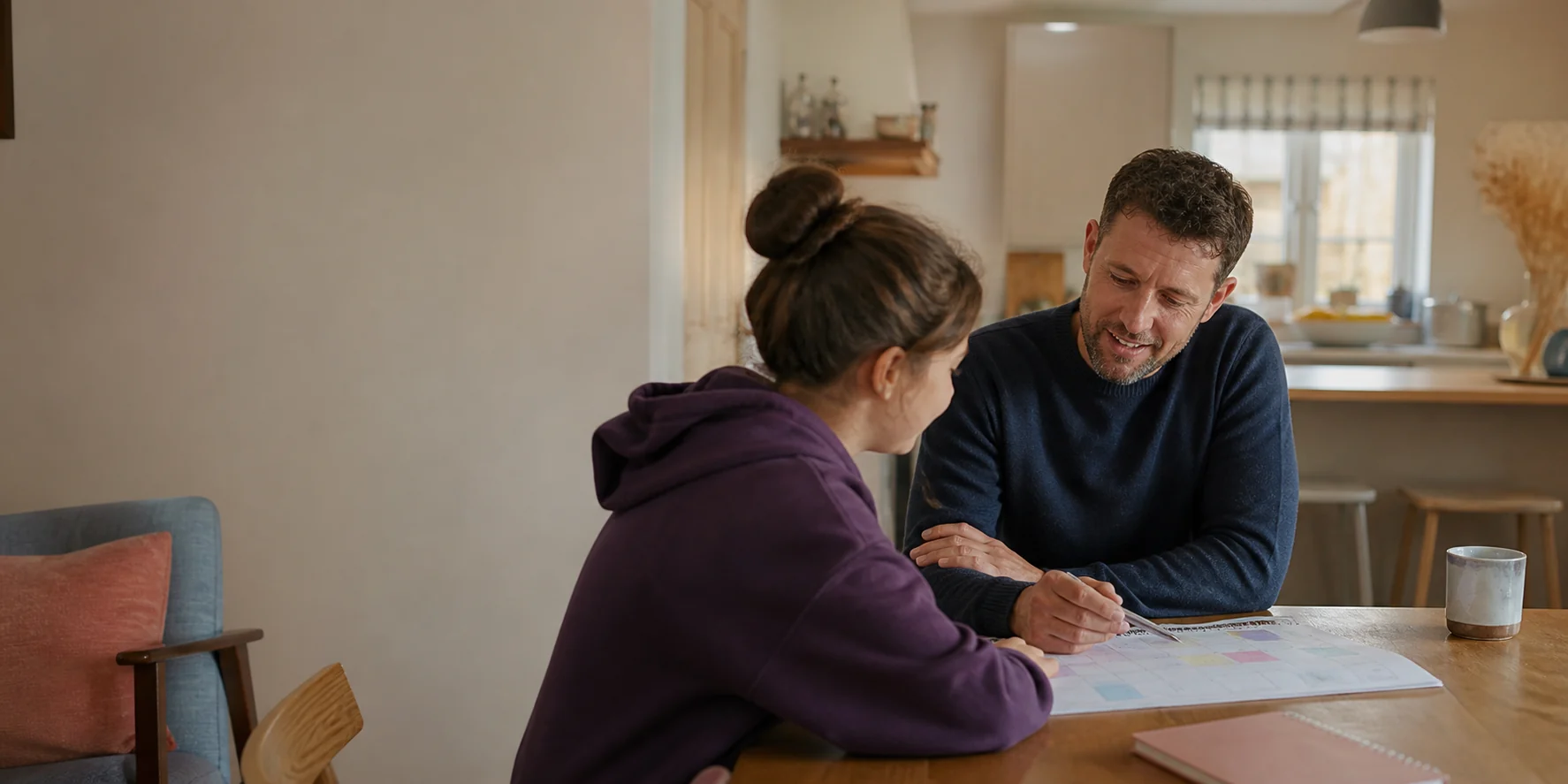
A careful guide to the open consultation, future preparation and why proposals must not be presented as current inspection criteria.
Multi-agency safeguarding, direct work, professional challenge and learning beyond formal notification thresholds.
Understanding outcomes, enablers and evidence while being precise about what directly applies to independent children’s homes.
A record is important, but the response, ownership, follow-up and learning often tell the more meaningful story.
How homes can retain previous decisions, recurring issues and improvement activity beyond changes in staffing and leadership.
Why completing learning, verifying evidence, demonstrating competence and holding current authority are different questions.
When a control fails, useful assurance follows the issue through action, ownership, handover, resolution and verification.
Capturing a child’s view matters. Showing how it influenced a decision or practice provides the stronger evidence of participation.
Why inspection readiness is stronger when evidence, review and improvement develop continuously rather than being reconstructed later.
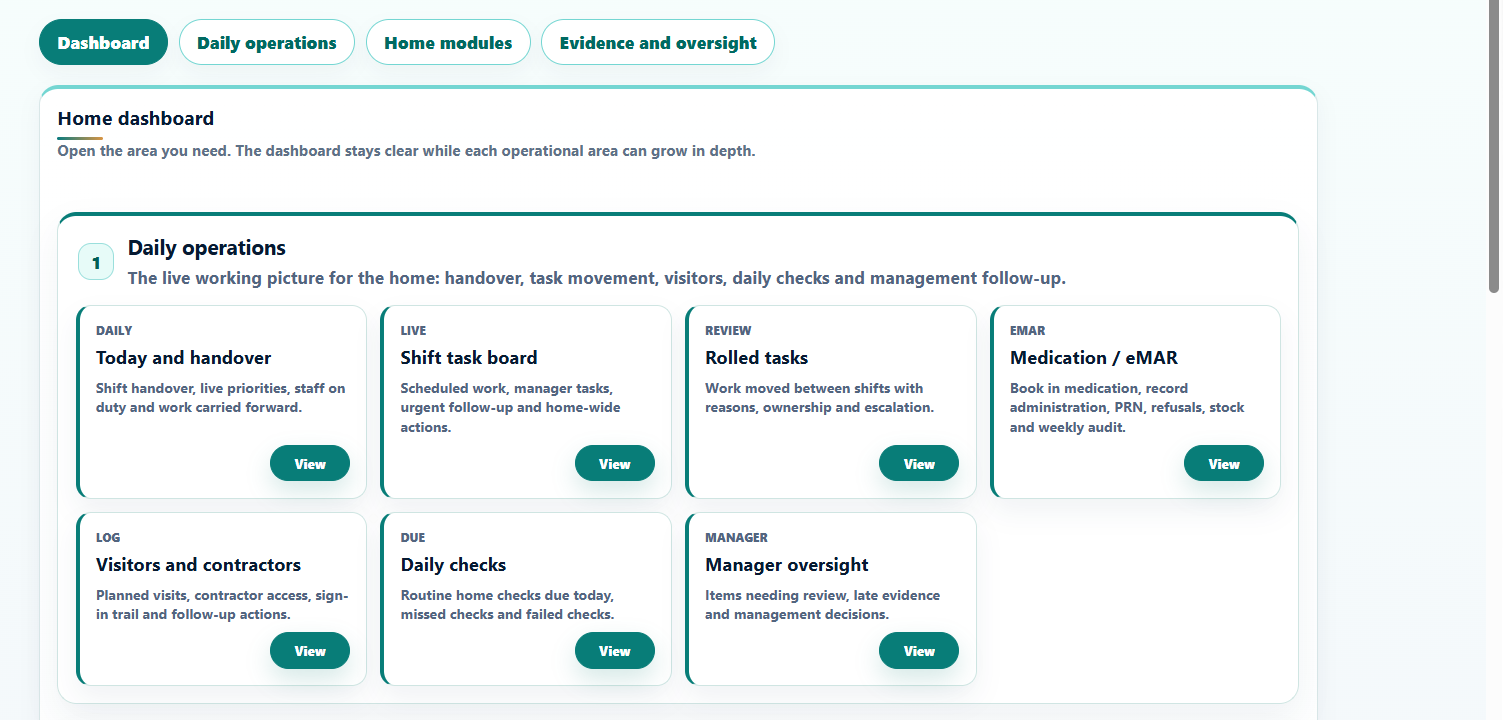
How a clear daily record can inform handover, child chronologies, safeguarding, health and management oversight without being copied everywhere.
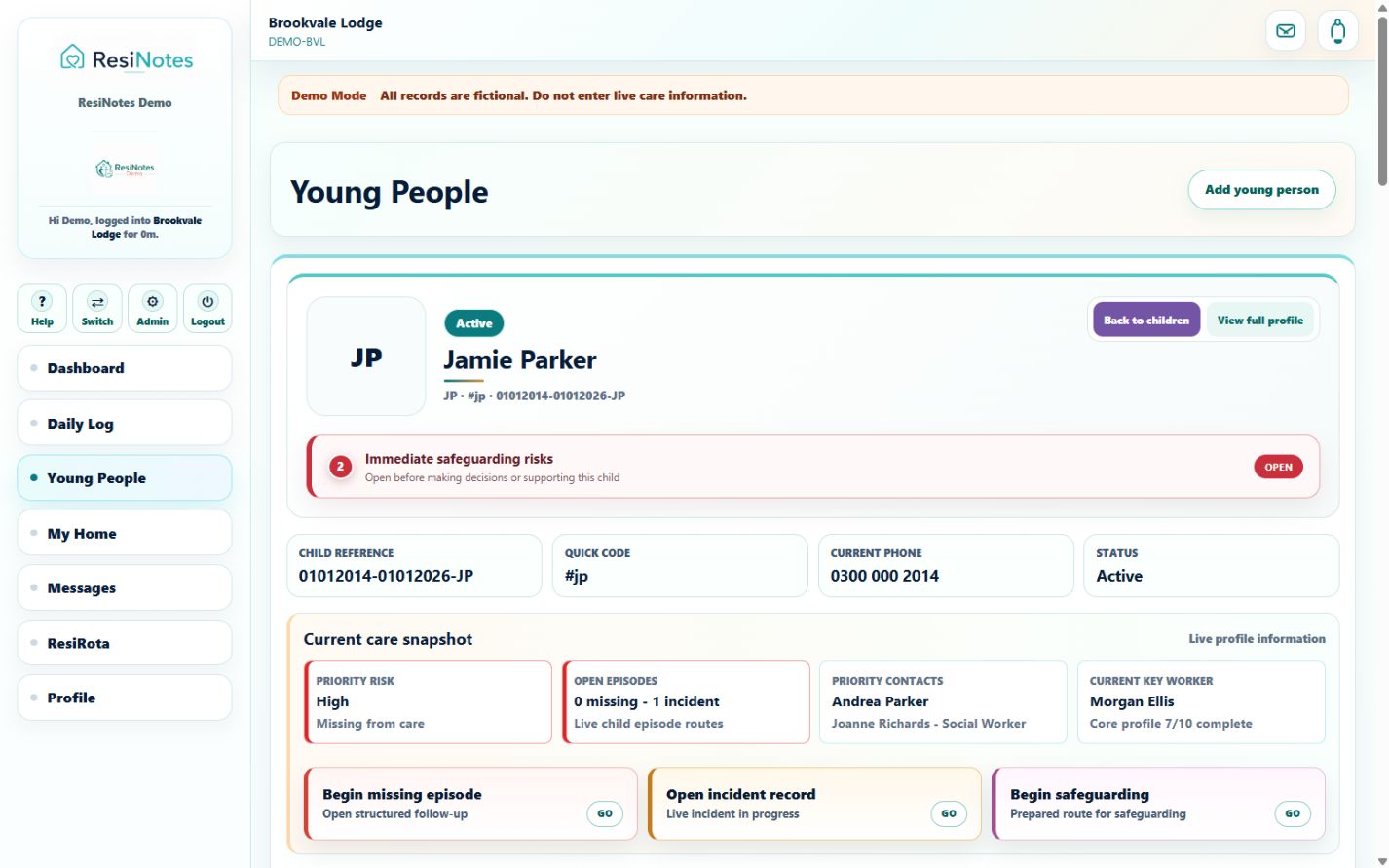
Identity, voice, relationships, communication and current care information should form one readable story while preserving their original sources.
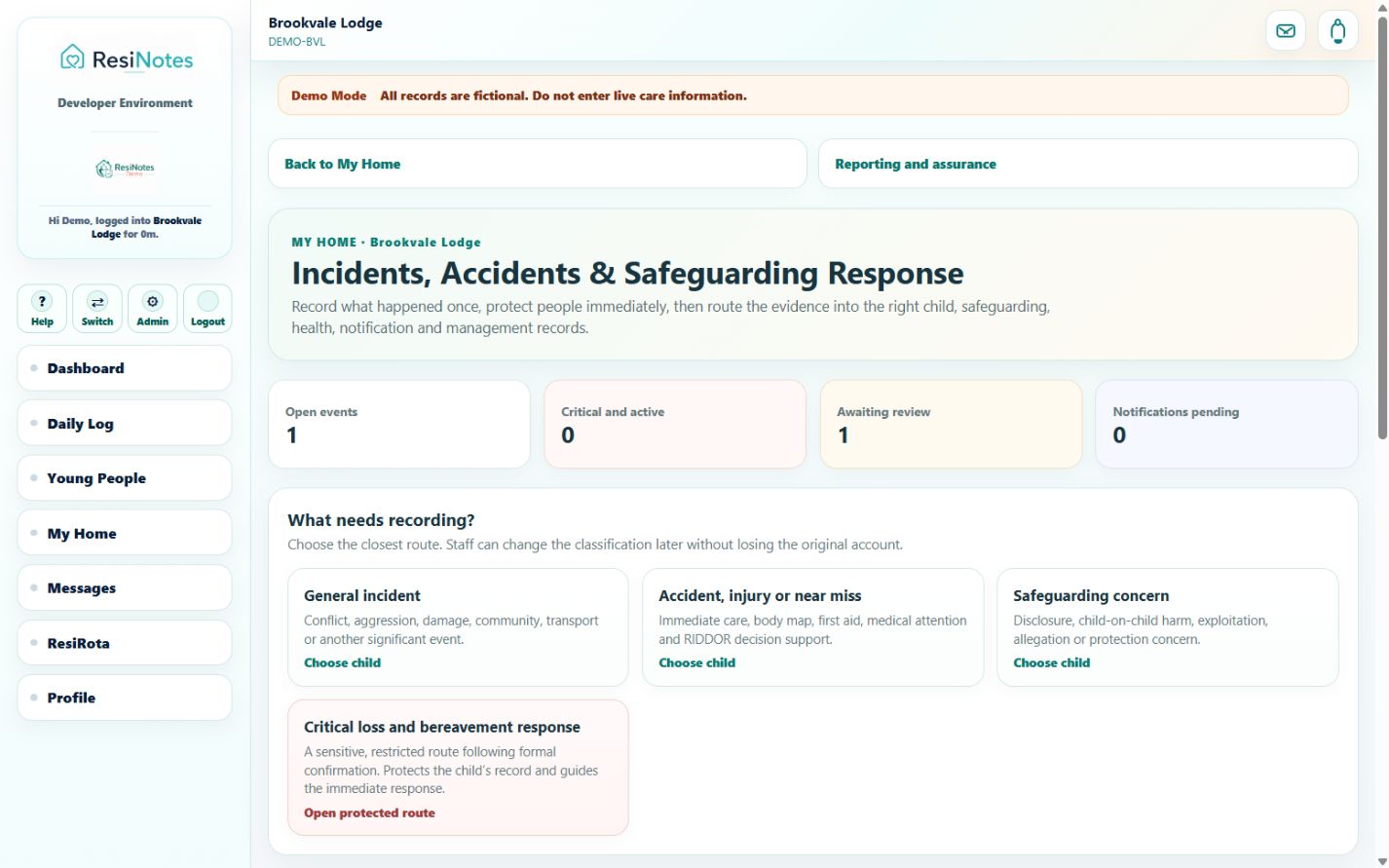
A factual first account should lead into the right welfare, safeguarding, notification and management records without losing its context.
Appointments, attendance and professional updates are more useful when they return to the correct chronology and inform the people supporting the child.
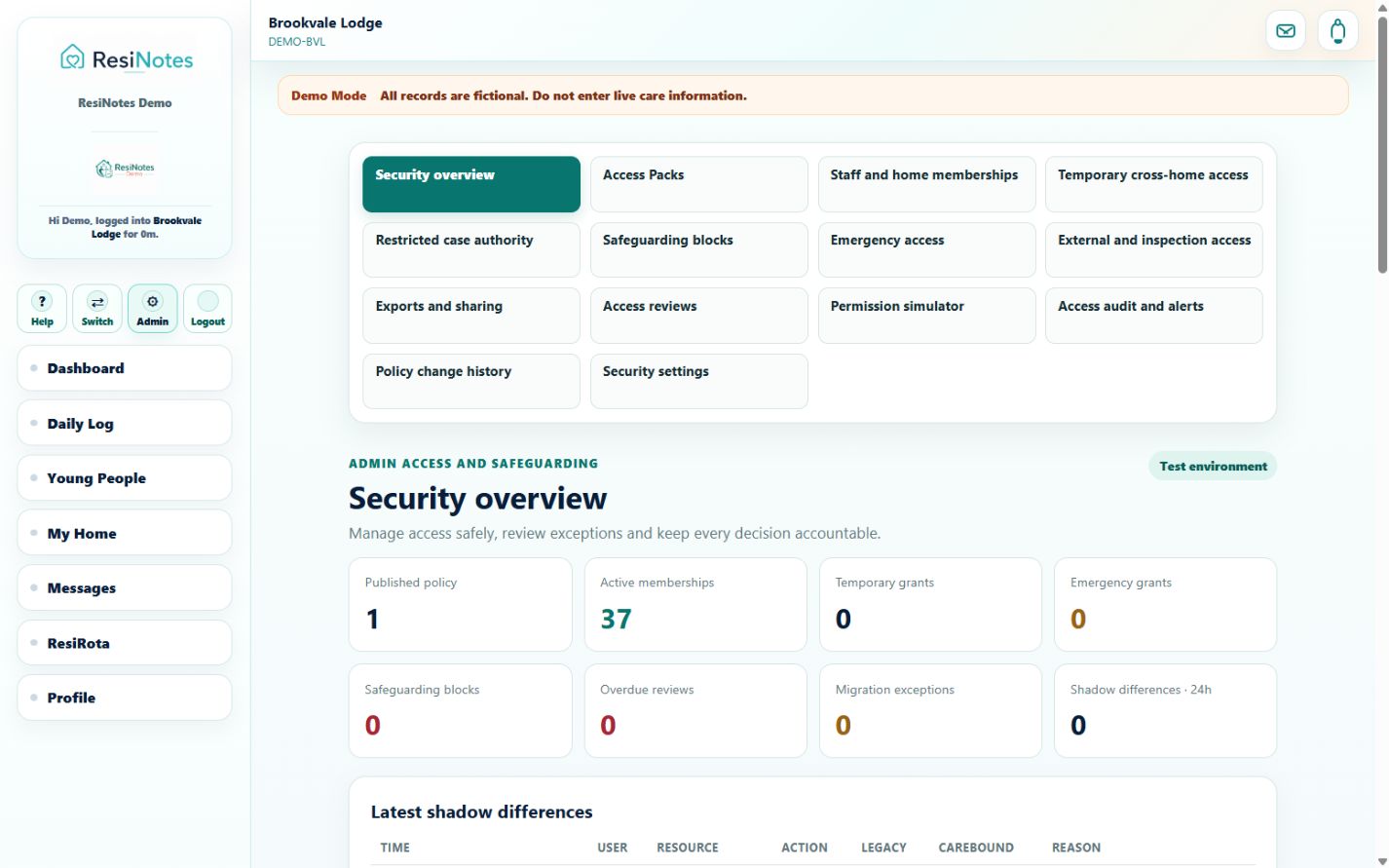
Why tenant separation, purpose-based permissions, temporary access and audit history must work together in children’s social care software.
Ofsted has set out a sharper enforcement and registration approach to illegal children's homes. Here is the practical read-across for registered residential providers.
The 2026 children's homes inspection framework keeps the focus on children's experiences, progress, protection and the effectiveness of leaders and managers.
New national analysis says children's care sufficiency depends on suitability, staffing, location, safety and wellbeing, not simply the number of available beds.
The government's implementation plan puts stable registered placements, stronger professional standards and workforce stability firmly on the children's homes agenda.
The 2026 safeguarding guidance strengthens expectations around looked-after children, information sharing, exploitation, residential risk and learning from serious incidents.

New policy on enduring relationships strengthens the focus on sibling contact, trusted adults and support as young people move from residential care towards adulthood.

A short sector watch on the pressures shaping children's homes, and why staffing, evidence and oversight need to stay connected.
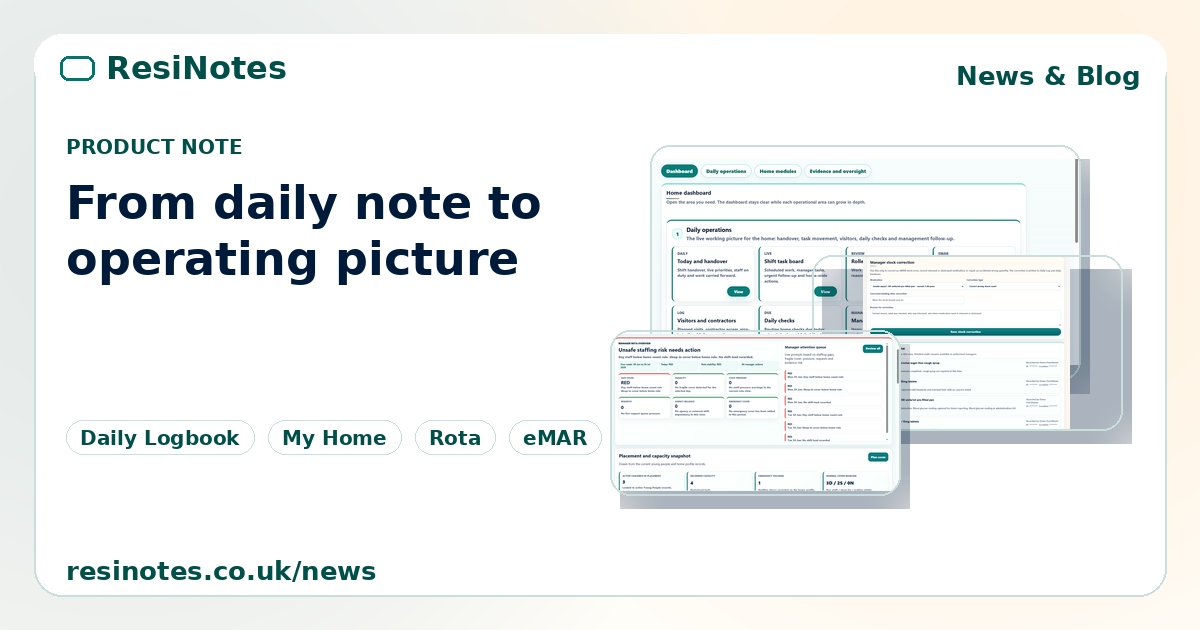
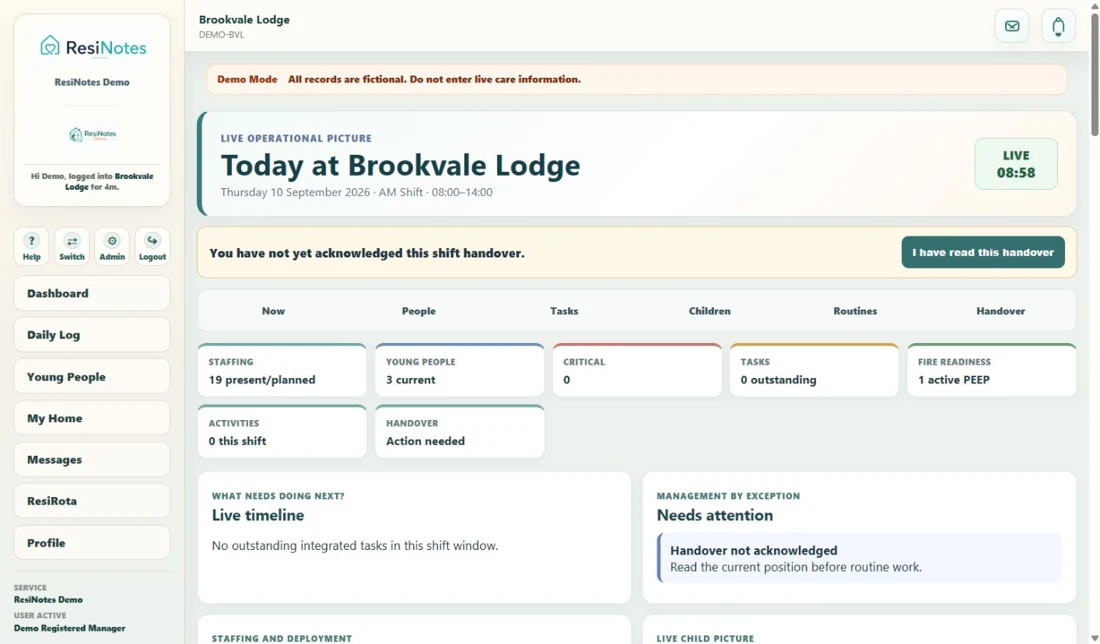
ResiNotes starts with the Daily Logbook, then connects the surrounding home activity that gives each daily record its context.
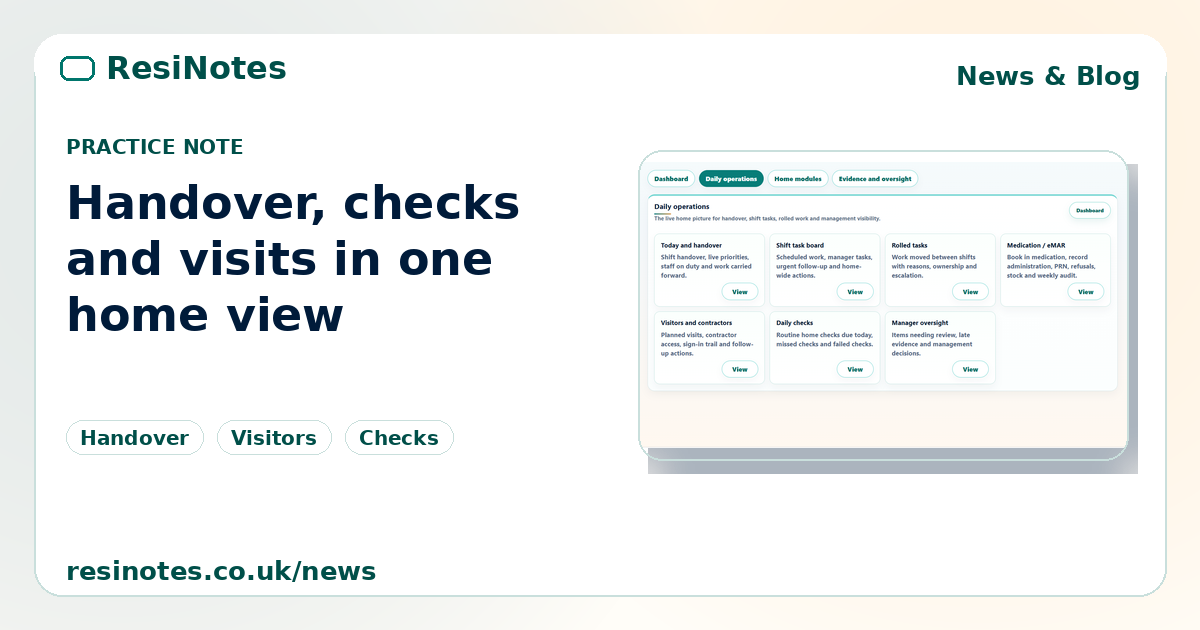
Handover, visitors, checks and manager oversight are not side admin. They are part of the live care picture around the child.
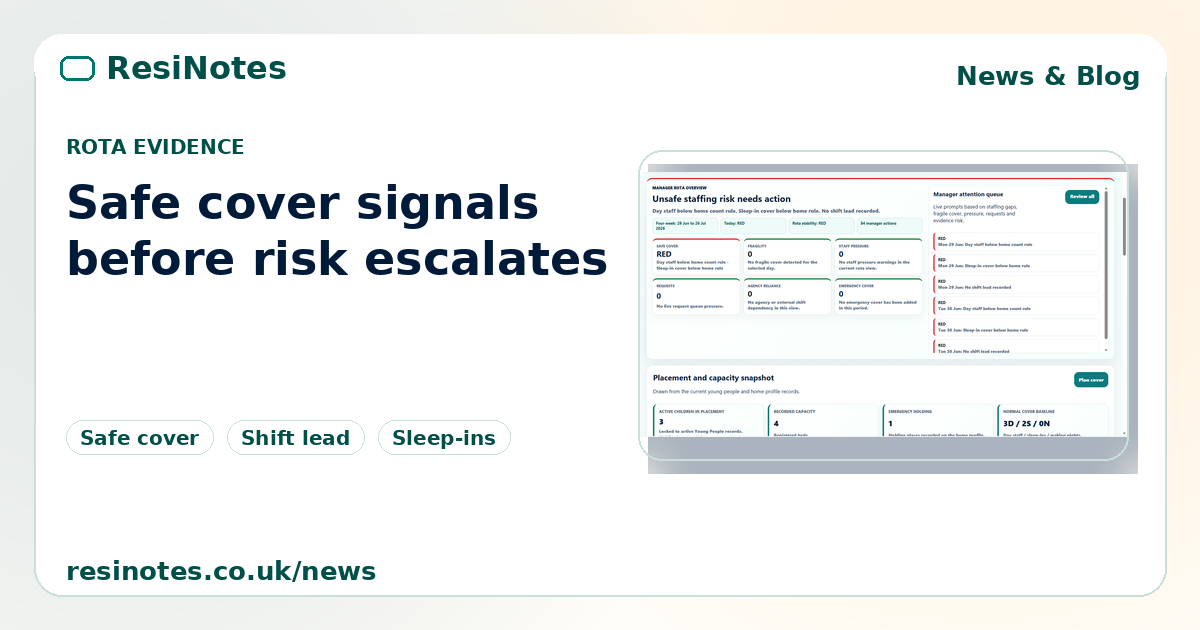
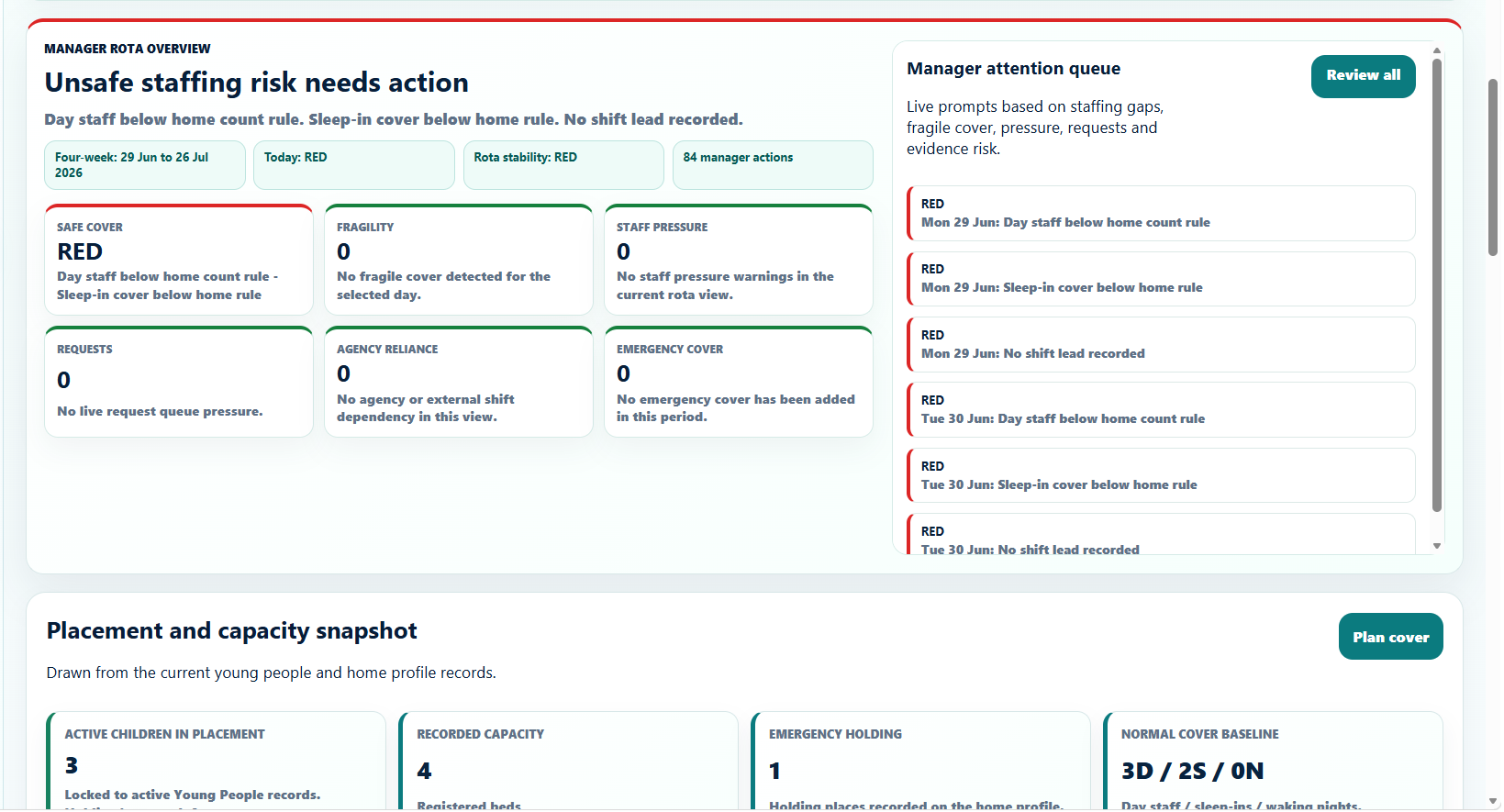
ResiRota is presented as a safe-cover and manager-attention tool, not just a grid with names in boxes.
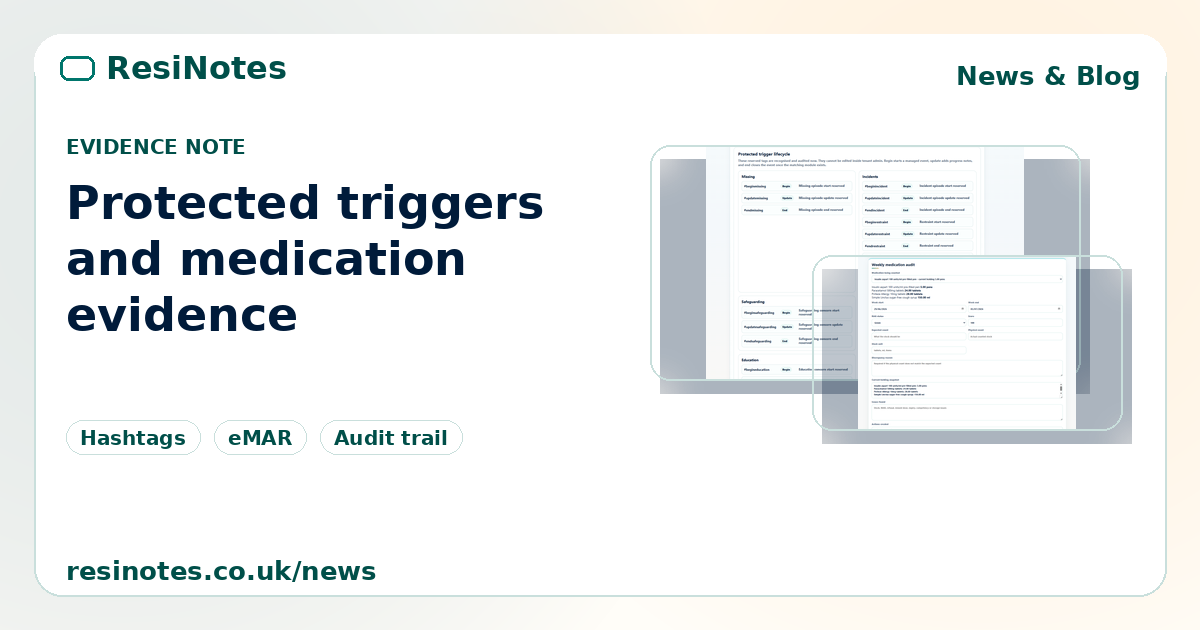
Structured tags and medication timelines help important records stay easier to follow when the home is under pressure.