Daily Logbook
Daily entries, attachments, sensitive records, late entries, recall search and child quick-code links.
Why it matters: connected workflows need a clear source record.
View moduleResiNotes starts with the daily record, then connects the work around it: home operations, young person context, safe staffing, missing episodes, incidents, protected triggers, medication/eMAR and oversight evidence.
Public demo: Some onboarding and verification steps are simplified so people can explore the platform more easily. Live environments include additional checks, safeguards and access controls.

Use the tabs to move through the platform without losing the wider picture: care recording, home operations, safety events and oversight evidence.
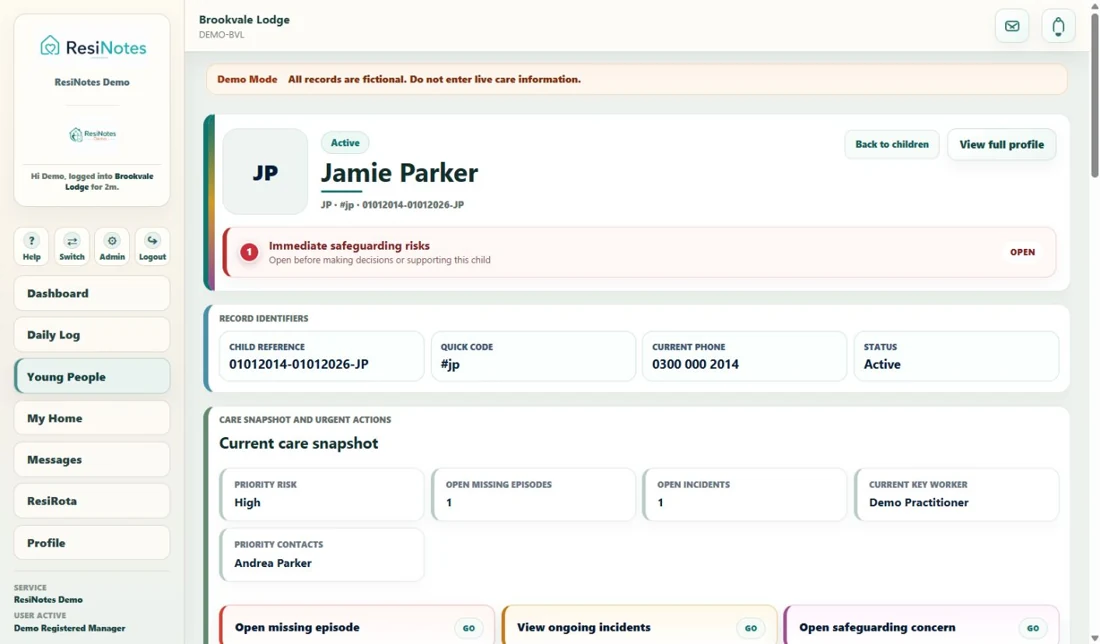
Daily entries, attachments, sensitive notes, late entries, child quick codes, recall logs and young person profiles provide the base record.
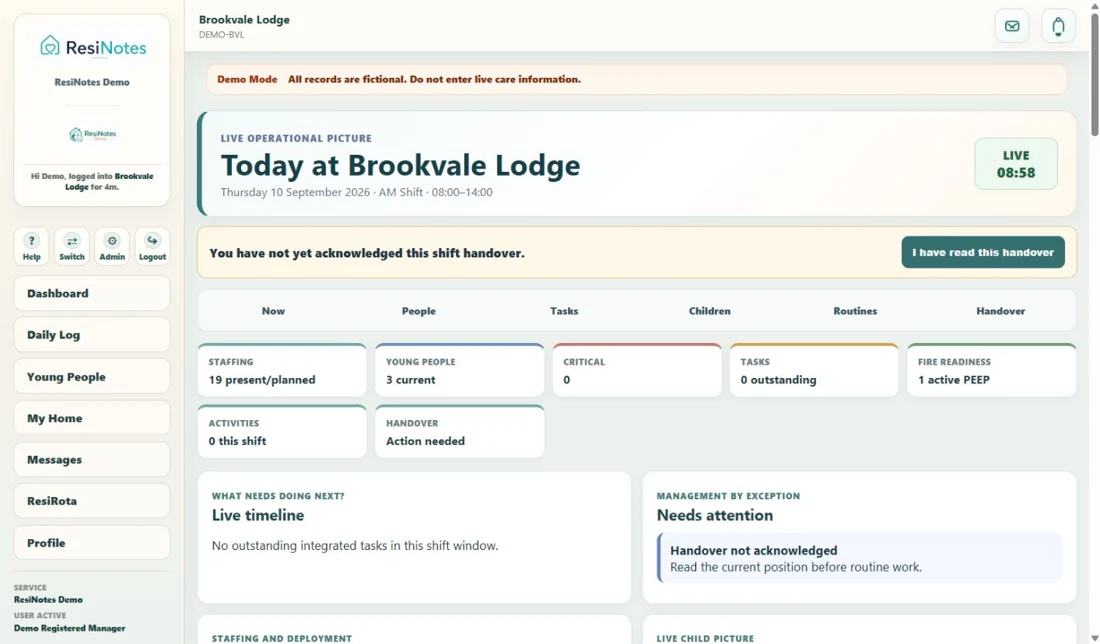
Handover, shift task board, rolled tasks, visitors, contractors, daily checks, home modules and manager follow-up sit in one home-aware area.
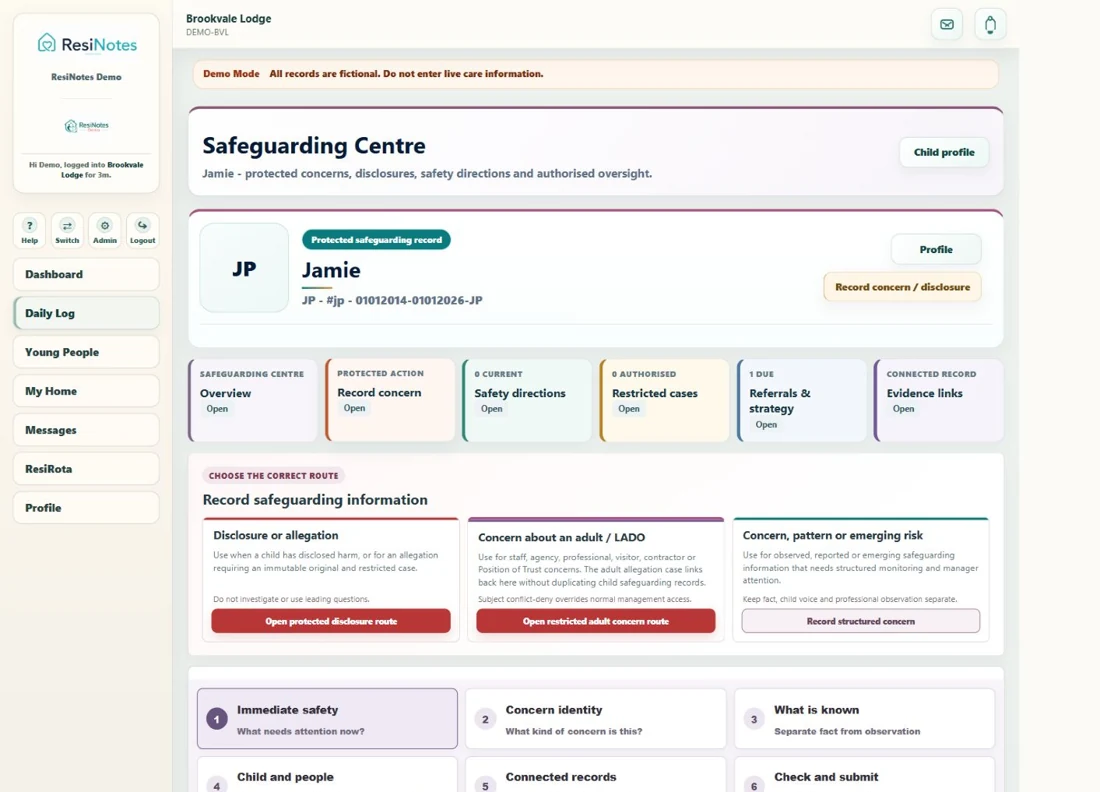
Safe cover, shift lead, night cover, missing episodes, incidents and protected begin/update/end tags help key events stay structured.
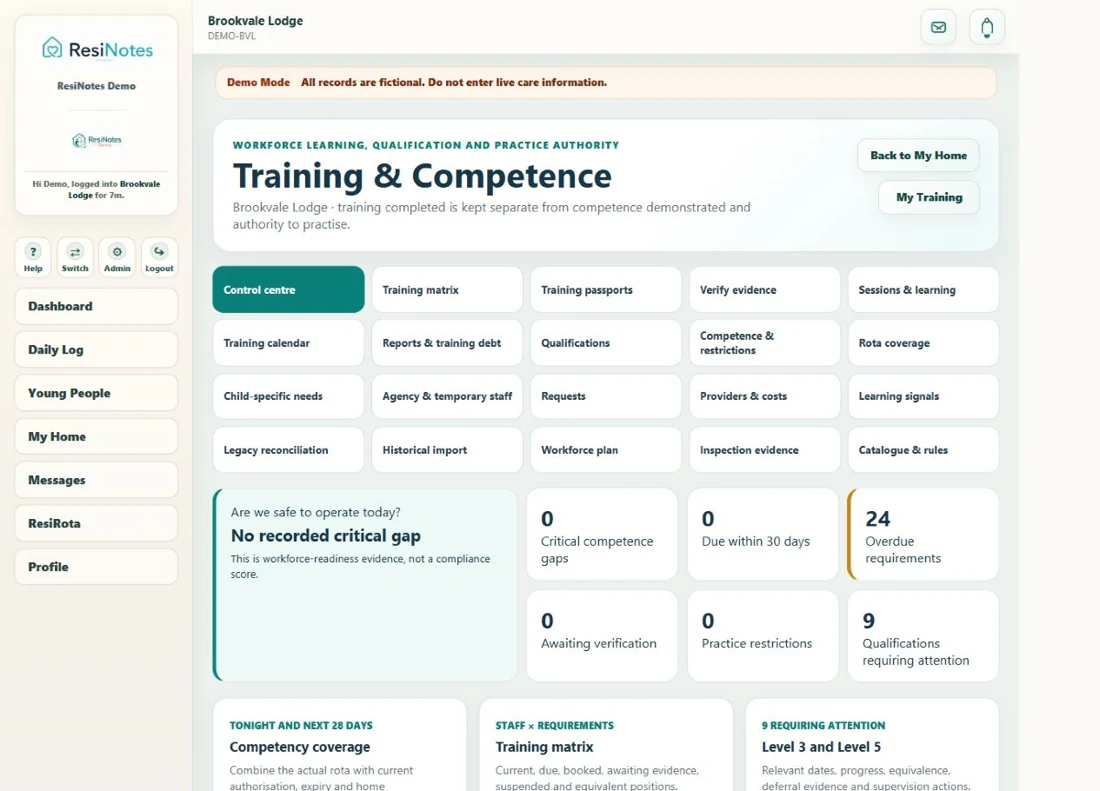
Medication/eMAR, stock audit, home evidence areas, Reg 44/45 readiness, Ofsted preparation and controlled exports support authorised review.
Each card explains what the module does and why it belongs in the home operating picture.
Daily entries, attachments, sensitive records, late entries, recall search and child quick-code links.
Why it matters: connected workflows need a clear source record.
View moduleHome dashboard, daily operations, home modules, evidence oversight, manager follow-up and operating picture.
Why it matters: the home has one practical launch point.
View moduleLive priorities, staff on duty and work carried forward from the house diary style working record.
Why it matters: handover becomes visible, structured and easier to review.
Scheduled work, manager tasks, urgent follow-up and home-wide actions.
Why it matters: work can move through the shift with clear ownership.
Work moved between shifts with reasons, ownership and escalation.
Why it matters: unfinished work stays visible until it is resolved.
Planned visits, contractor access, sign-in trail and follow-up actions.
Why it matters: visitors and contractors are part of the safety picture.
Routine home checks due today, missed checks, failed checks and manager visibility.
Why it matters: routine checks become evidence rather than assumptions.
First aid, fire, water, kitchen, knives, ligature, medication storage, cleaning, COSHH and vehicle/security checks.
Why it matters: operating checks sit with the home record.
Maintenance, documents, home risk, premises review, Reg 44, Reg 45, Ofsted readiness and exports.
Why it matters: managers can see evidence gaps before formal review.
Standing child protocol, live episode, updates, closure and review foundations connected to protected tags.
Why it matters: live risk and standing information stay separate but connected.
View moduleBegin, update and end workflow concepts with manager review, evidence links and chronology foundations.
Why it matters: incident records need structure and clear follow-up.
View moduleSafe cover, four-week glance, shift lead, sleep-ins, waking nights, requests, pressure and decision trail.
Why it matters: rota planning has care risk attached to it.
View moduleMedication booking, administration, PRN, refusals, stock correction, weekly audit and timeline.
Why it matters: stock and administration evidence need to live in the same accountable area.
View moduleService tags, young person quick codes, unknown tag review, protected triggers and audit.
Why it matters: tags can route work and protect important workflows.
View moduleLate evidence, review queues, daily operations, rota warnings and management decisions.
Why it matters: managers need attention queues linked to evidence.
Controlled exports for authorised reporting and service evidence packs.
Why it matters: evidence should be produced deliberately and logged.
Evidence mapping, monthly visit evidence, quality of care themes and unresolved gap visibility.
Why it matters: inspection preparation should be continuous and evidence-led.