
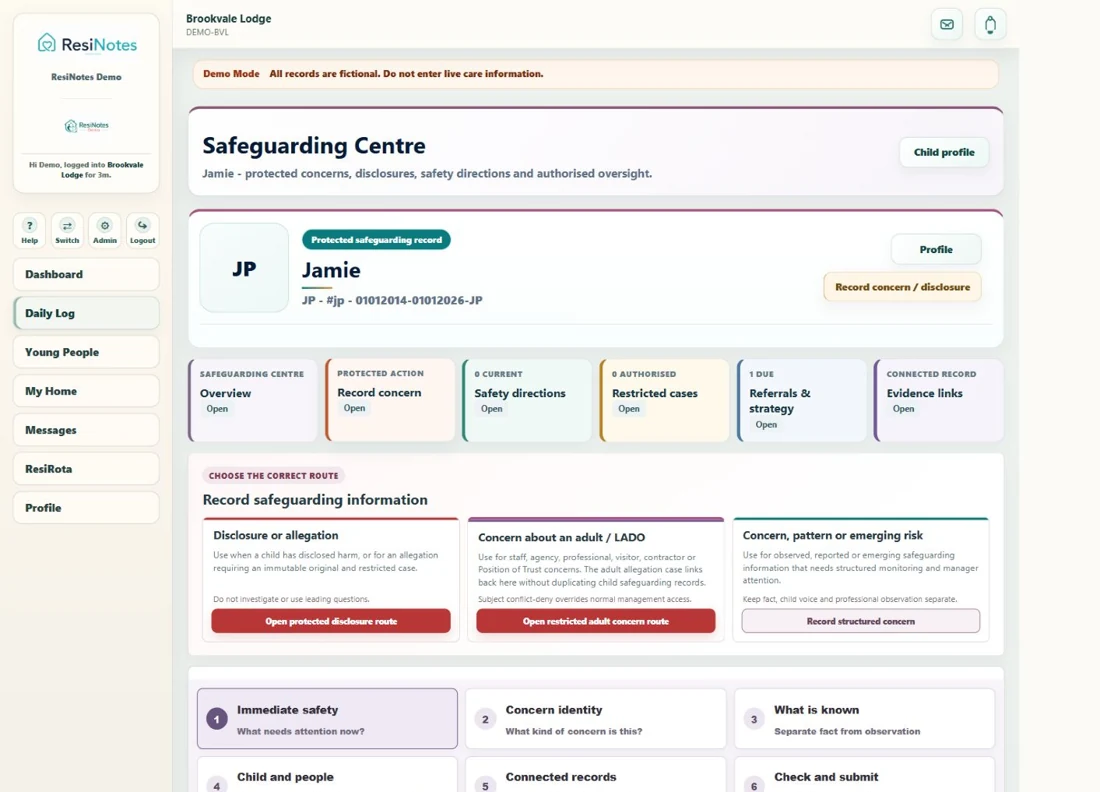
The development goes beyond a place to record an event. It brings structured concerns and disclosures together with management reviews, restricted cases, professional involvement and practical safety directions. The aim is to make the response easier to follow while keeping sensitive information within the appropriate boundaries.
A structured starting point
Concerns and disclosures can be recorded from the child’s Safeguarding Centre. The record provides a place for the concern and immediate safeguarding information, so the subsequent response has a clear starting point. Links to relevant chronology entries, risk information, incidents and missing episodes help authorised reviewers retain the wider context.
Those links matter because a single concern may be part of a developing picture. Connecting the source records allows reviewers to look at that context without treating every entry as an isolated event.
Practical guidance without unnecessary disclosure
One of the centre’s most important distinctions is between sensitive case detail and the guidance a practitioner needs to provide care. Restricted case narratives are limited to appointed case members. Managers can publish operational directions and safe practitioner guidance for the relevant audience.
The care team needs to understand what to do next. That does not mean everyone needs access to every detail of a restricted case.
Where acknowledgement is requested, staff can record that they have read and understood the guidance or ask for clarification. This gives the team a practical way to surface uncertainty rather than leaving an unclear direction unchallenged.
Review becomes part of the record
The management review workspace allows authorised managers to record their review, update the concern’s status and set the next review date. They can also publish guidance, choose the practitioner audience and request acknowledgement. A review history keeps those steps visible over time.
This supports a more useful question than whether a form has been submitted: what was decided, what should happen now and when will the position be reviewed again?
Professional involvement and evidence stay connected
The centre includes routes for referrals, professional actions and strategy work, with access appropriate to the user. Relevant evidence can be linked back to the safeguarding picture. These records support coordination and follow-up; they do not replace conversations with professionals or the actions required by a home’s safeguarding procedures.
What changes for teams
Practitioners have a clear route to record a concern and read the directions intended for them. Managers have a structured review workspace. Appointed case members can access restricted case work. Each route serves a different responsibility while remaining connected to the child.
Available screens and actions depend on service activation, user permissions and case membership. The centre supports professional judgement: recording a concern or completing a review does not, by itself, establish that a child is safe or that an action has been effective.
Take a closer look
Explore the Safeguarding Centre overview or ask us to walk through concern recording, practitioner guidance and restricted case work.